We respect your privacy.

Secretary Powell's 13 Rules of Leadership

[Taken entirely from the official blog of the U.S. State Department.]

As we reflect on former Secretary of State Colin Powell’s legacy, we are reminded of his thirteen rules of leadership which have guided so many of our colleagues and principals. We are grateful for his love of the State Department and his legacy that we still feel in the workplace.

Secretary Powell’s 13 Rules:

1. It ain’t as bad as you think! It will look better in the morning.

2. Get mad then get over it.

3. Avoid having your ego so close to your position that when your position falls, your ego goes with it.

4. It can be done.

5. Be careful what you choose. You may get it.

6. Don’t let adverse facts stand in the way of a good decision.

7. You can’t make someone else’s choices. You shouldn’t let someone else make yours.

8. Check small things.

9. Share credit.

10. Remain calm. Be kind.

11. Have a vision. Be demanding.

12. Don’t take counsel of your fears or naysayers.

13. Perpetual optimism is a force multiplier.

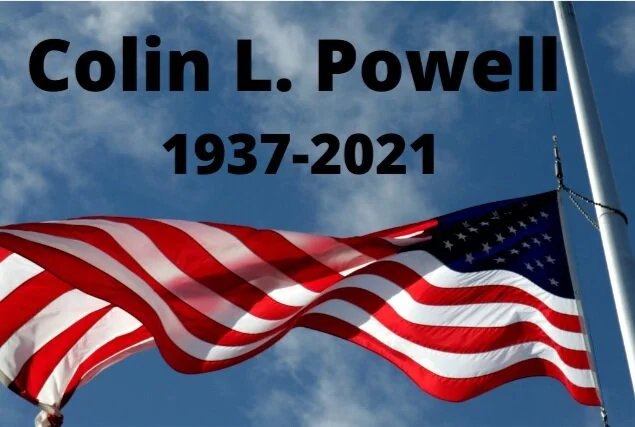
Colin L. Powell

1937-2021

Pulling Back the Iron Curtain

“While the world was reading one story, God was writing another.”

“While the world was reading one story, God was writing another.”

Stories From a Cold War Missionary

In 1977 our organization, Cru® (Campus Crusade for Christ International®) asked Larry and me to go live covertly—live a double life—behind the Iron Curtain in communist Poland. Our pioneering assignment focused on starting a clandestine grassroots ministry of evangelism and discipleship. As we packed our bags to depart, we counted the cost. Would we ever return?

Those were the bitterly cold days of the frigid Cold War; and for our parents, a death would have been easier. Missionary activity, illegal under that atheist government, required rigorous tactics. Therefore, they were not allowed to discuss our whereabouts with anyone.

Defying the government and obeying the commands of Scripture, by God’s grace we established a beachhead—first in Kraków and then in Warsaw—and inched forward, seeking to help fulfill the Great Commission. Quietly we met with individuals, students in particular, who wanted to hear the message of the Good News.

Two years into this assignment, on one particular June afternoon in 1979, I found myself home alone with our newborn son. Larry and our energetic daughter went to the nearby park for much-needed fresh air and sunshine, and with their departure, silence descended. Then, in a tiny, yellow, upstairs room set apart as our baby nursery, God met me in an unusual way.

Within the quietness, I began to ponder the inevitable results of serving in a closed country. As covert missionaries operating under mandatory secrecy, newsletters to churches, phone calls to pastors, and interviews with mission committees did not exist. For the safety of those coming alongside of us, it was imperative for all operations to take place undercover and under a code of silence.

Standing at the changing table, I prayed and poured out my heart to the Lord: “God, You are doing so many amazing things, and yet, no one even knows! We can’t talk about Your work! We can’t tell the great and mighty miracles that You are allowing us to see.”

Never will I forget what occurred next. In that moment, the Lord spoke to my heart with these powerful words: “Debby, you do what I have called you to do today—you take care of this little baby—and the day will come when you can tell My Story.”

The day will come when you can tell My Story.

So now, decades later, I feel as though I stand on holy ground to finally see the fulfillment of His promise given in that Warsaw baby nursery in 1979. With a sense of reverence and awe, I embrace the privilege of telling His Story, a Story with two themes: His amazing miracles behind the Iron Curtain, but also His amazing miracles behind the curtain of my heart.

Yes, the day has finally come to tell His Story.

“We went through fire and water, but you brought us to a place of abundance” (Psalm 66:12).

I invite you to read further:

Pulling Back the Iron Curtain: Stories From a Cold War Missionary

Secret Discovery on the Leader's Desk

My desire to linger kept me fixed in place. When the tour group moved on, I unobtrusively remained behind.

My desire to linger kept me fixed in place. When the tour group moved on, I unobtrusively remained behind.

My desire to linger kept me fixed in place. When the tour group moved on, I unobtrusively remained behind. Sunshine poured through the second-floor windows, and sand cranes gracefully strolled on the grounds below. An individual’s workspace intrigues me, and I wanted to capture this rare moment.

Standing in the modest corner office of Dr. Bill Bright, president, and founder of Campus Crusade for Christ, a sense of awe gripped me as I studied my surroundings. The painting of George Washington kneeling in prayer hung over his desk (The Prayer at Valley Forge by Arnold Friberg). A spear from the jungle tribe in Ecuador, the tribe responsible for the massacre of Jim Elliot and four other missionaries, stood propped up in the corner. Photos of his beloved family rested on a tabletop. And, of course, there was a globe reminding me that his commitment to helping to fulfill the Great Commission passionately fueled his every waking breath.

Then, it caught my eye.

A small glass paperweight rested inconspicuously on his desktop and contained a simple five-word inscription: I am not a grasshopper. Over and again, I read the sentence and allowed its impact to sink in.

I am not a grasshopper.
— Dr. Bill Bright

The explosive power of the meaning shattered the silence as I slowly gained a powerful awareness of the heart and soul of this extraordinary global leader. Oh, my. With his entire being grounded in the truth of his identity in Christ, Dr. Bright’s faith-filled perspective enabled him to endure leadership storms beyond comprehension and progressively march toward becoming all that God created him to be.

One’s self-perspective sets the trajectory of one’s life. For Bill Bright, he humbly saw himself immersed in Christ. Like Joshua and Caleb—the only two spies who viewed God’s promised land through eyes of faith—Bill Bright viewed himself through his relationship with Jesus, and he lived emboldened with a holy boldness beyond human belief. (Numbers 13:33 NLV).

Had Dr. Bright been sitting in the leather chair in the corner, I would have engaged him in conversation regarding the paperweight’s message:

How did you make this discovery? Was it your own insight from Scripture, or did you first learn this truth from someone else, perhaps Dr. Henrietta Mears?

What difference has this reality made in your leadership of a global organization?

Describe how such Biblical self-awareness kept you from ever being self-seeking.

How has this humility influenced your relationships?

Do you have a word to offer a generation struggling to find identity amid a culture in crisis?

Soon, too soon, I had to leave the office and rejoin my group. But the quiet visit stays with me, and the five-word sentence serves as a goldmine: I am not a grasshopper. When I view myself through the eyes of faith, I see myself as the woman God created me to be—His daughter, His delight.

Living With Eternal Intentionality®

Intimacy with Jesus

Authenticity with others

A passion for your calling

A purpose for your influence

What mementos on your desk reflect your perspective on life?

Do you see yourself as God sees you, or is this an area for personal growth?

How do these words, I am not a grasshopper, challenge you to see yourself as God sees you?